Live. Laugh. Dicks.
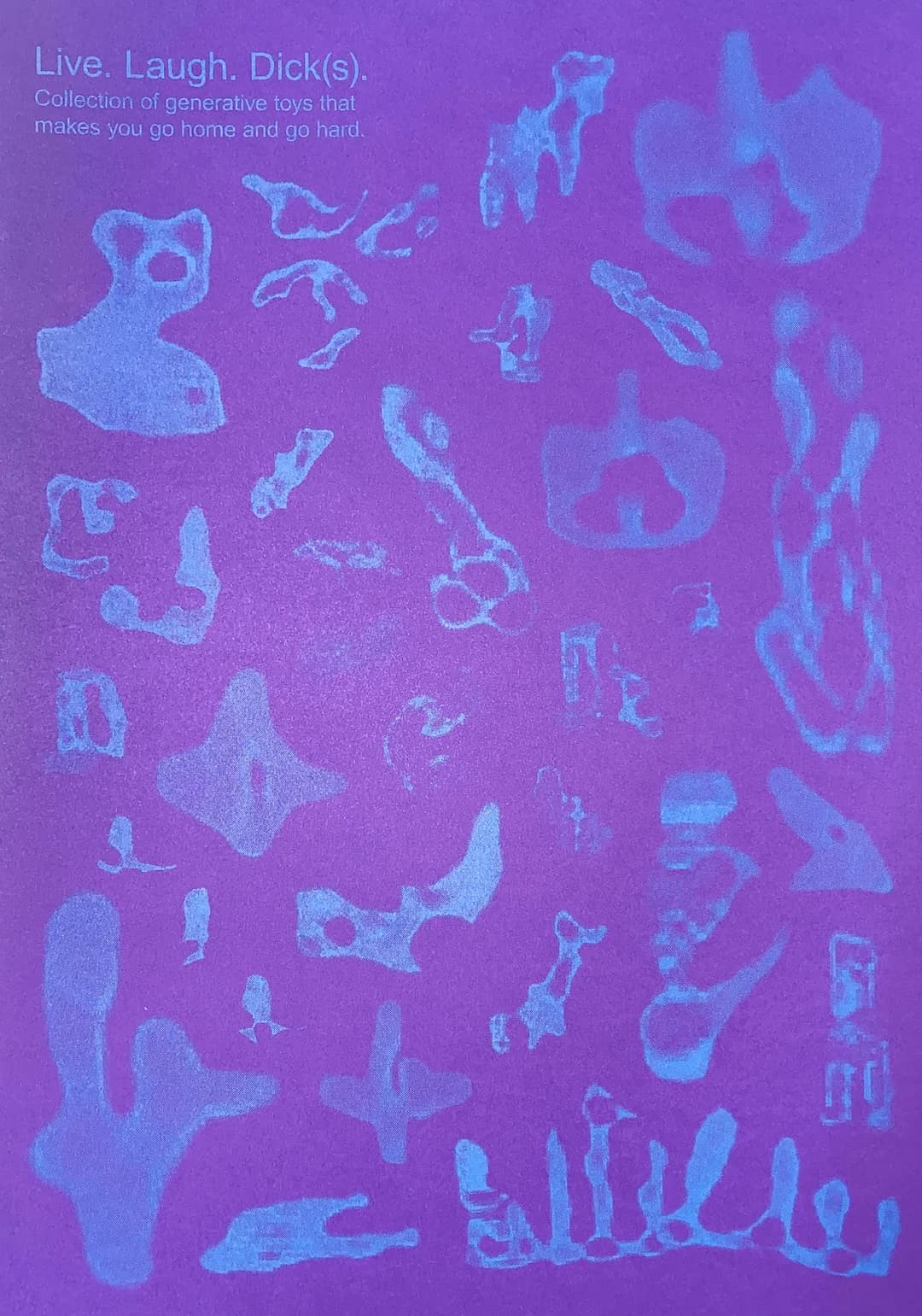
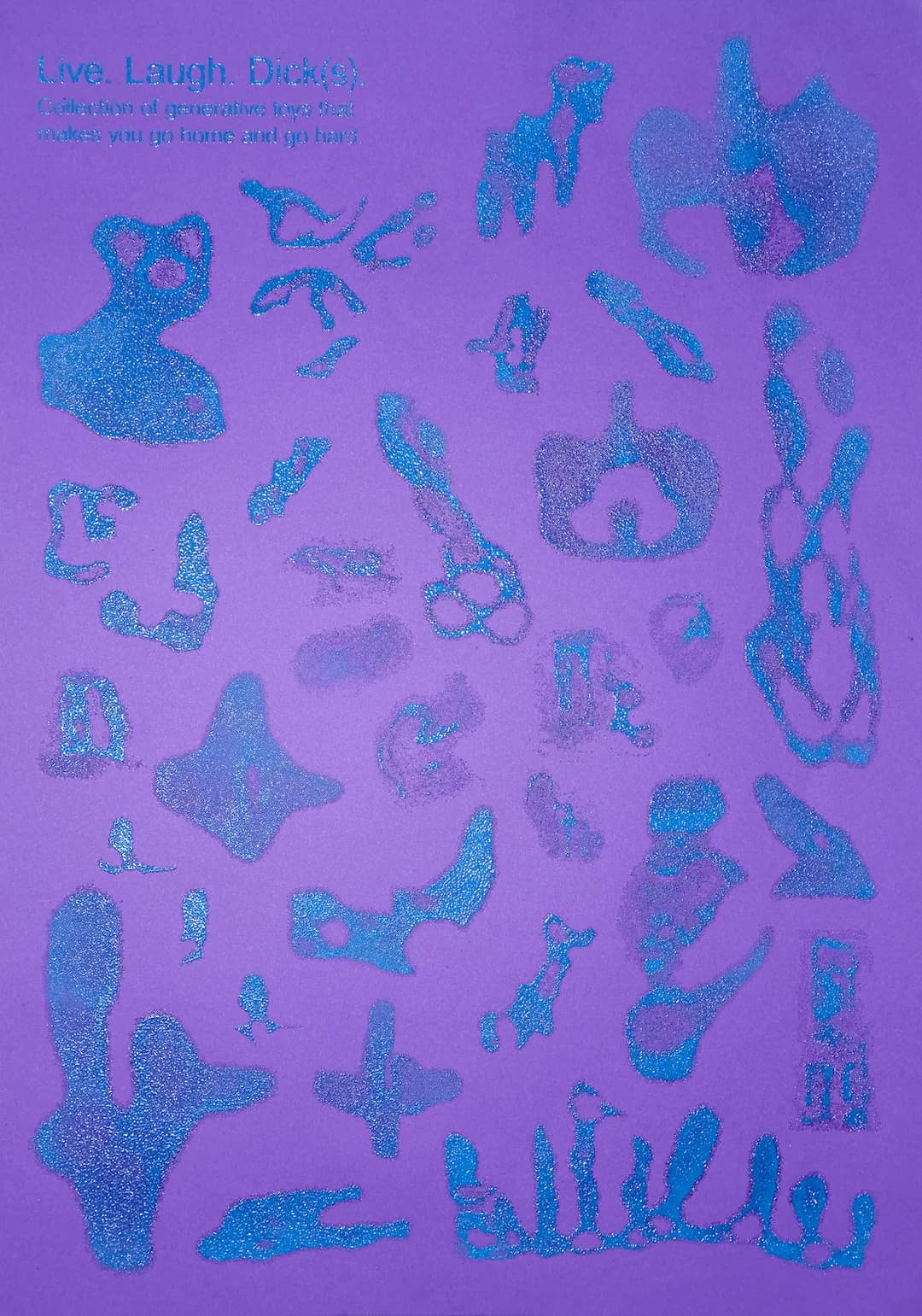
Back in April, wedogood invited me to join their zine with the theme of “Love Machine. Machine Love”. This poster is a stand-alone version of my work in the zine. More than a collection of quirky-looking toys, It reflects our current perception of sex toy design (dildos and butt plugs in particular) while suggesting new boundaries for toy design.
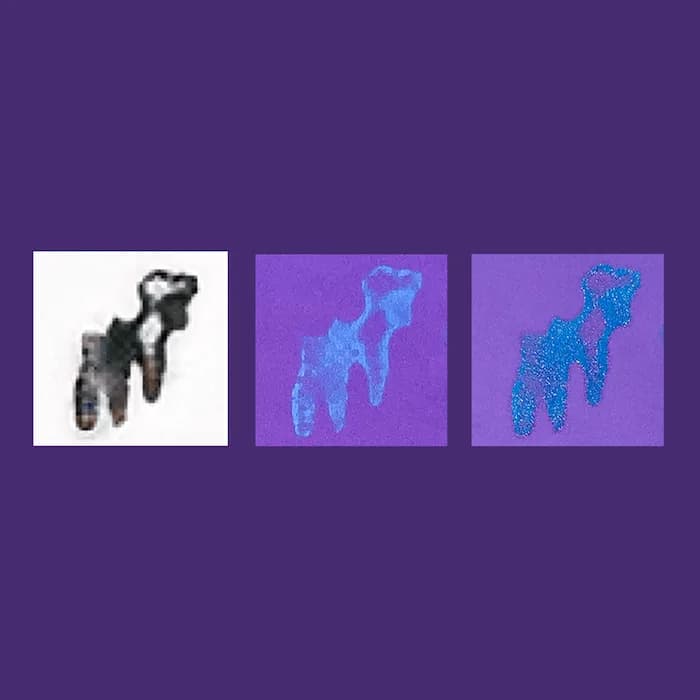
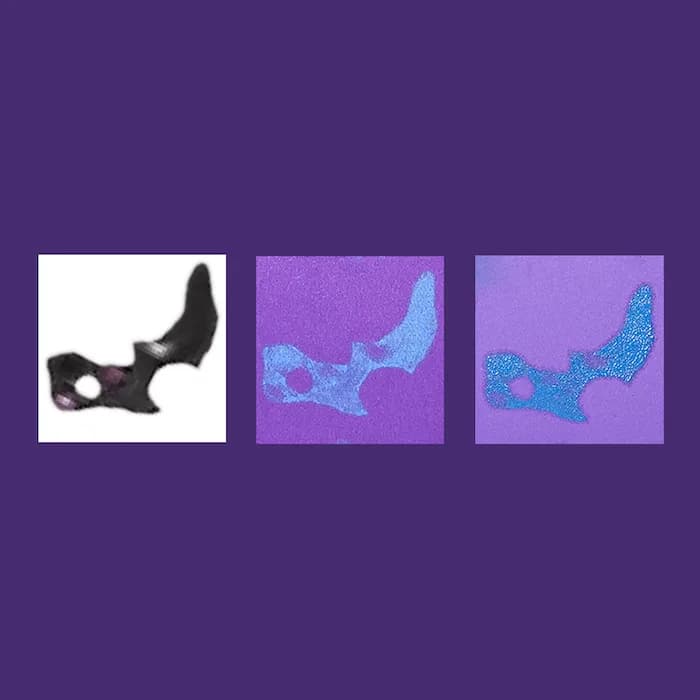
After being trained with 3000 photos of toys, the generative model clearly gets the idea that a sex toy needs to be pointed (of course). But it takes the idea further by re-imagining toys with multiple heads, and toys with irregular shapes or shapes that are different from cylinders. Several generated samples also include toys that are bound together since e-commerce often places their toys next to each other in product photos. If such an arrangement stimulates the buyer, then why not include them in the real product design? Many of the generated samples also propose getting rid of the inside of the toys as it is not a significant feature. They suggest void, disjoint parts, transparent material, and anything else but the common solid shape. Pleasure has its own curiosity. And maybe toys for pleasure should also be more suggestive, rather than adaptive.
This project is built on my custom GAN model, inspired by StyleGAN2. The StyleGAN2 architecture itself is gigantic. To afford training, I made multiple adjustments in the architecture, including downsizing the output image size to 128x128. This seriously damaged the print quality but Risograph helped me bypass that. I also divided the training into multiple sessions + used the Tensorflow Data Dataset & Tensorflow Record to optimize the whole training speed. All are for this project to be run on the free resource of Google Colab, which has a limited quota every day. So much engineering just to have more dicks while paying less 🥴
WHY RISOGRAPH?
Generative art is not for size queen. Artworks generated from ML model struggle to have a good resolution. A simple image of 300x300 would take 90,000 units when being flattened. It means that a larger output images come with a larger cost of computation. It often requires days of training on expensive GPU. When it comes to printing, this limit in output results in pixelating details, blurry edges, and inconsistent separation between object and background. Not only that, generative images oftentimes have the checkerboard effect, as a result that the machine “painted” each pixel independently and lack of perception of the image as a whole.
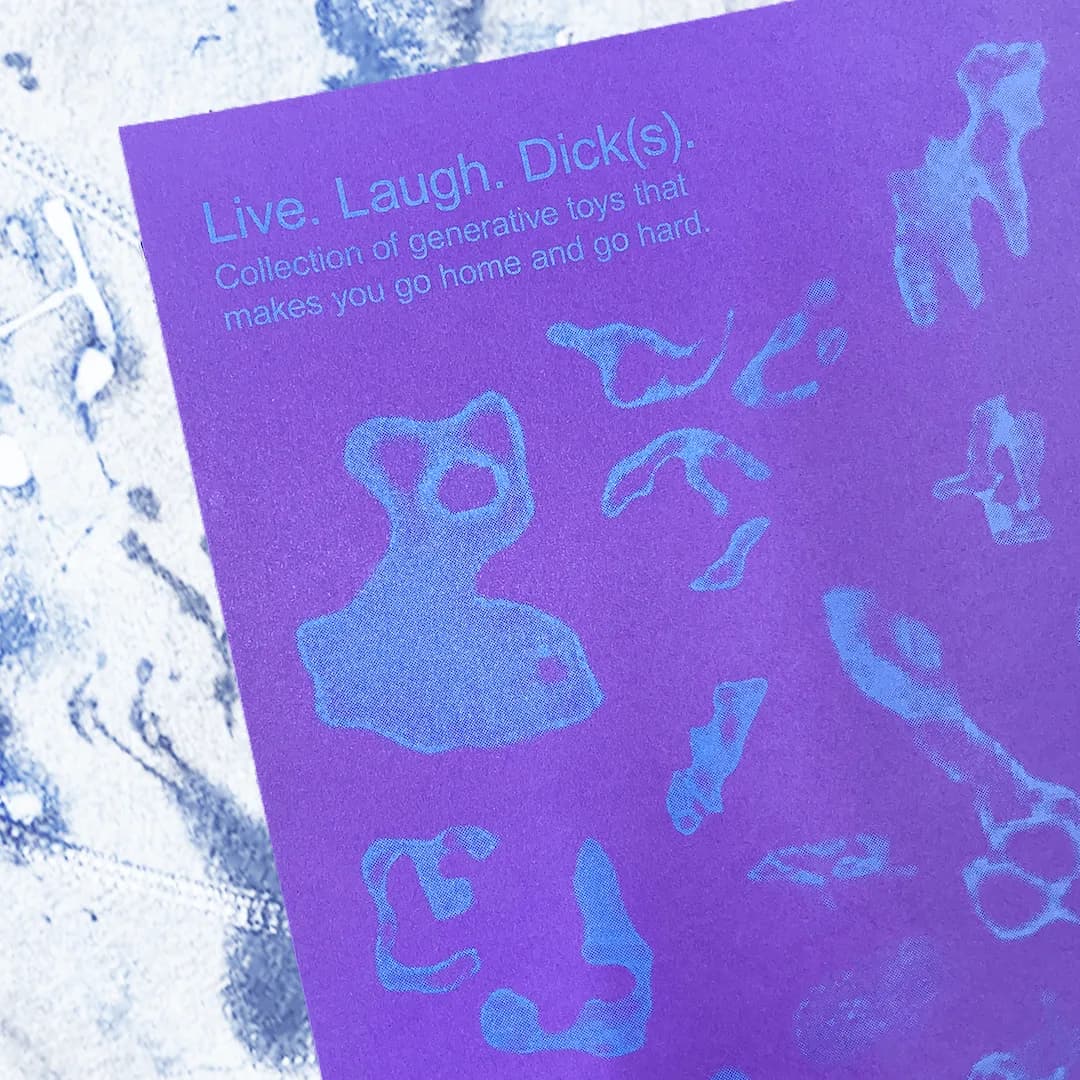
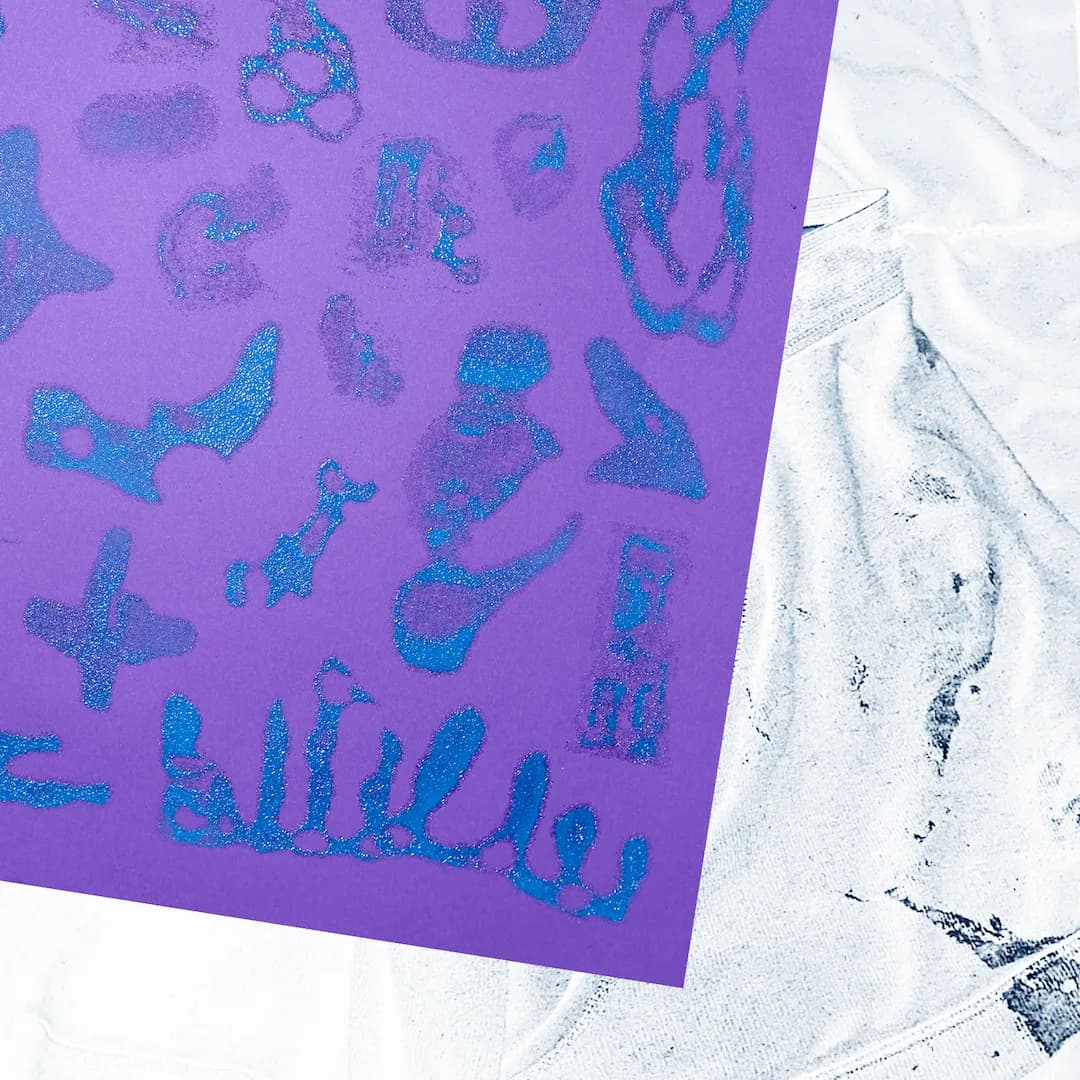
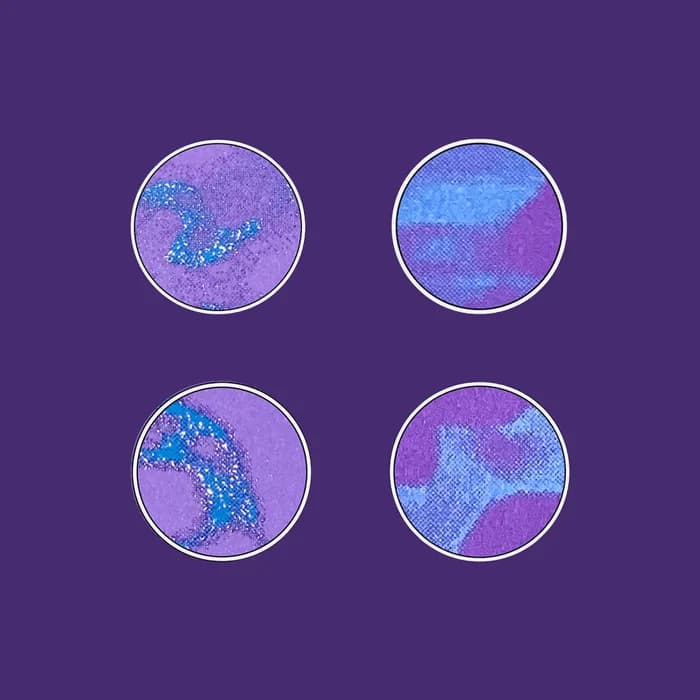
In order to produce this digital artwork in high-quality print (A3), we first put the 128x128 generated images through a half-toned treatment - a technique to simulate the image tone through dots. By carefully adjusting the dot size, we gave the pixelated images a sharper optic illusion in general. A subtly similar pair of aqua ink and purple paper were then chosen to let the half-toned dots blend smoothly with the background. The various size of dots + different % of ink embrace the blurry edge. The aqua ink also expands optically when we tilt the poster to different light direction. Object edges “fade” gradually into paper like chalk. The drawback of pixelating and not having sharp edges is now a compliment toward the initial inspiration of stains.
*
Printed by wedogood.
Risograph & thermography